GIS structuring, modeling and management of geographic data for fiber optic networks (FTTH - FTTB - FTTE - FTTO)

Fiber optic networks are built step by step through several phases, including field surveys and engineering studies. In many countries, after the period of massive deployment, the main challenge now lies in the operation, maintenance, and evolution of the networks.
In this context, geographic data is no longer simply a final deliverable produced at the end of construction works. It has become an operational asset, used on a daily basis to operate the network, plan extensions, manage maintenance activities, and ensure service continuity.
This page explains how to structure, qualify, and leverage the data of a fiber optic infrastructure throughout its lifecycle, relying in particular on data models and on a GIS toolchain — including ConnectControl, ConnectServices, and ConnectField — designed to meet the needs of both public and private network operators.
Explore Real-World Use Cases for Processing and Maximising the Value of Fiber Optic and FttH Network Data
Why geographic data is critical in FTTH/FTTE projects
Fiber optic networks are characterized by a very high density of assets, continuous changes (connections, extensions, repairs), and multi-stakeholder operations involving operators, public authorities, and subcontractors.
Geographic data, and its effective use, becomes the common foundation throughout the entire lifecycle of networks.
Poorly structured or poorly managed data leads to network performance issues and often results in additional costs related to:
-
Operational intervention difficulties and reduced reliability of certain connections
-
Loss of knowledge about network information
-
Higher corrective maintenance costs compared to preventive maintenance
-
Inability to plan network evolutions and make the best decisions
What types of geospatial data are used for fiber optic networks? ?
Functional and relational data
-
Upstream / downstream relationships
-
Occupancy and spare capacity
-
Network continuity
-
Unique identifiers and naming conventions
-
Distance between the Central Office (CO) / Optical Line Terminal (OLT) and the Fiber Distribution Point (FDP) – attenuation calculations
-
Fiber availability (for network expansion)
-
Distribution point saturation
Infrastructure and network
-
Fiber optic cable routes
-
Optical paths
-
Fibers and capacity
-
Fiber Distribution Points (FDP), Fiber Distribution Hubs (FDH), Central Office / OLT site
-
Manholes, ducts and poles
-
Connection points and service drops
Operational data
-
Infrastructure status
-
Intervention history
-
Maintenance data
-
Responsibility areas
A software suite designed to ensure the reliability, quality and value of geospatial data
Solutions available as SaaS or integrated into your information system, giving you full autonomy to digitize, qualify and leverage your data
Collect
Collect your data and ensure the reliability of your datasets with our mobile GIS application


Leverage
Visualize, edit, manage and analyze your infrastructure data with our web GIS platform


Validate
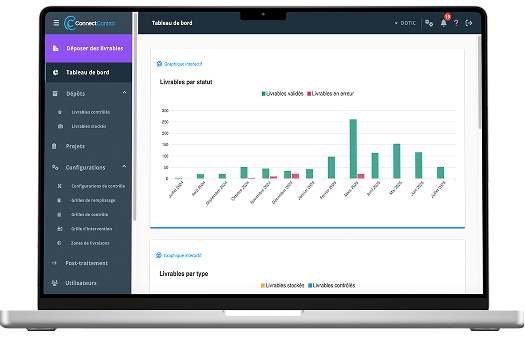
Model, structure and validate the quality of your infrastructure data

Explore
Query your data using natural language with an AI designed for GIS


Key challenges of geospatial data for FTTH - FTTE fiber optic networks
Daily network operations and maintenance
Once the network is in service, data becomes an operational lever used to:
-
accurately locate infrastructure assets
-
prepare field interventions
-
monitor incidents
-
coordinate field teams and stakeholders
Objective :
Moving from “delivered” data to living, operational data
Ensure data continuity and long-term sustainability
-
Operator change
-
Takeover by public authorities
-
Evolution of standards and tool
Objective :
Ensure standardized, transferable, and sustainable data over time
Having qualified and reliable data
The deployment phase generates large volumes of data produced by multiple stakeholders.
Challenge:
Imprecise or outdated data generally leads to inaccurate asset locations during field interventions and uncertainties about the actual state of the network, which weakens maintenance and renewal decision-making.
-
Ensure that the data complies with industry quality standards and the operator’s internal reference frameworks
-
Detect inconsistencies
-
Objectively validate delivered datasets
This is an essential step to build reliable network operations.
Supporting network extensions and evolution
FTTH networks continue to evolve, whether through additional connections, area extensions, or adaptations to new usage needs.
Challenge:
-
Integrate these evolutions without degrading data quality
-
Maintain the overall consistency of the network
A software suite designed to ensure the reliability, quality and value of geospatial data
Solutions available as SaaS or integrated into your information system, giving you full autonomy to digitize, qualify and leverage your data
Collect
Collect your data and ensure the reliability of your datasets with our mobile GIS application
Leverage
Visualize, edit, manage and analyze your infrastructure data with our web GIS platform
Validate
Model, structure and validate the quality of your infrastructure data
Explore
Query your data using natural language with an AI designed for GIS
Data quality and reliabilitys : a strategic foundation for FTTH infrastructure management
In fiber network projects, controlling data helps to:
-
Improve the reliability of decisions
-
Secure payments
-
Provide objective exchanges between stakeholders
-
Reduce rework and disputes
Une expertise reconnue
Dotic has proven expertise in fiber data quality control and qualification, developed through collaborations with:
-
major infrastructure operators
-
local authorities and public utility associations
-
national stakeholders involved in broadband deployment governance
Do you want to transform your geographic data into a true operational and decision-making tool?
-
Qualify, structure and ensure the reliability of your geospatial data
-
Ensure consistency between your field data and your digital reference systems
-
Operate and maintain your fiber infrastructure throughout its lifecycle
-
Secure network evolutions and extensions