Industrializing Geospatial Processing: From Traditional GIS to Data Engineering

As data volumes continue to grow and use cases become increasingly complex, Geographic Information Systems (GIS) are now undergoing a profound transformation.
Historically focused on cartographic production and one-off spatial analysis, GIS platforms must now address large-scale challenges related to industrialization, data reliability, and operational performance.
This shift in paradigm requires moving beyond GIS as a simple “tool” toward a true geospatial data engineering approach — one capable of structuring, automating, and securing the entire data lifecycle.
Industrializing data processing while addressing field realities
The industrialization of geospatial data processing faces several structural challenges in practice:
1 - A systemic lack of data quality
Data quality remains one of the main bottlenecks. Organizations are often confronted with heterogeneous formats, incomplete datasets, and proprietary lock-in approaches that limit export, control, and interoperability capabilities.
This situation leads to a multiplication of specific processing workflows, with each dataset requiring dedicated adaptations.
In this context, implementing upstream data validation and quality control solutions becomes essential. Dedicated tools now make it possible to automate these checks, detect inconsistencies, and progressively improve data quality before integration into the information system.
2 - Paralysis caused by fragmentation
Another major obstacle lies in the fragmentation of data and tools. Organizations often manage multiple databases, formats, and update methods for the same information.
This fragmentation leads to duplicated processing workflows and a loss of overall data consistency.
Implementing a single source of truth, accessible through dedicated visualization and update interfaces, helps streamline data management and simplify operational workflows. Modern Web GIS platforms support this approach by providing a centralized point of access to geospatial data.

3 - The disconnect between field operations and the information system
In many organizations, a gap still exists between field reality and the data available in the information system. Field surveys are carried out and then manually integrated into the GIS, introducing delays and increasing the risk of errors.
This disconnect leads to a loss of trust in the data and often results in teams reverting to field documents such as DWG plans, handwritten notes, or paper-based records.
Today, evolving technologies make it possible to reduce this gap, particularly through field data collection solutions directly connected to the GIS, enabling continuous data updates. Mobile applications such as ConnectField illustrate this approach by streamlining synchronization between field surveys and the information system.
4 - Acquiring and maintaining expertise
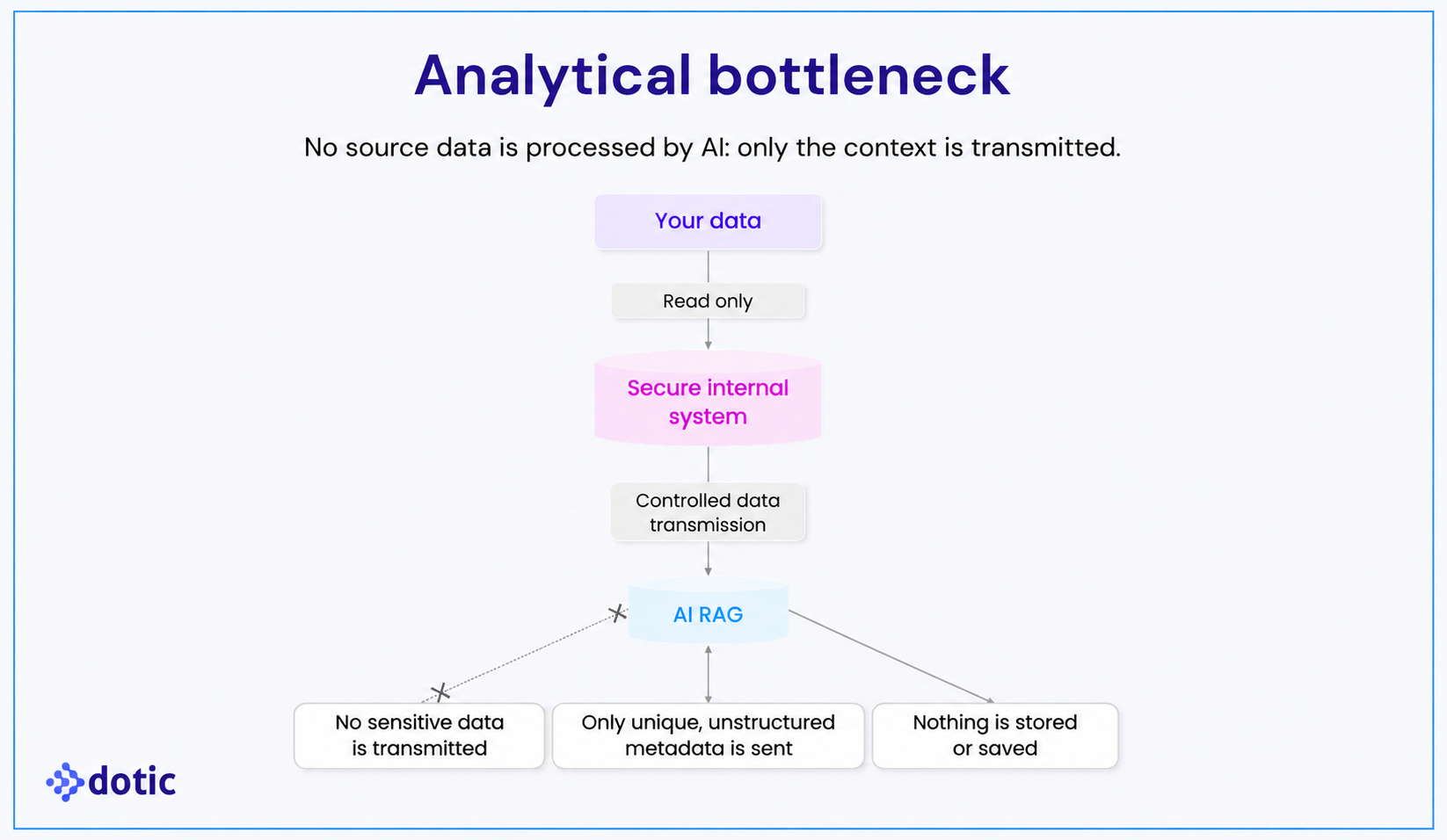
5 - The analytical bottleneck
The growing demand for data-driven insights is placing increasing pressure on GIS teams, which are frequently asked to deliver analyses, dashboards, and performance indicators within tight deadlines.
This challenge can be addressed by empowering business users with self-service tools that enable them to explore data, generate maps, and create reports independently, reducing their reliance on GIS experts for day-to-day analytical needs.
Toward an industrial approach to geospatial data
1- Standardizing to industrialize
Data standardization is a fundamental requirement for ensuring consistency, interoperability, and reusability across geospatial datasets.
It enables information from multiple sources to be integrated into a common data model, making it easier to process, analyze, and leverage data across different operational contexts and scales.
2 - Structuring data quality levels
A progressive approach to data quality makes it possible to work with heterogeneous datasets while continuously improving their reliability over time.
This approach relies on automated enrichment, validation, and data cross-checking mechanisms, enabling organizations to gradually achieve higher levels of data quality.
3 - Automating processing workflows
Automation is a key driver of industrialization. It helps structure workflows, ensure reproducibility, and reduce manual intervention.
Processing pipelines orchestrated through open-source tools such as Airflow make it possible to manage these workflows at scale while optimizing operational performance.
4 - Moving toward data engineering
This transformation reflects a broader shift toward data engineering practices, including:
- Python-based development;
- automated testing;
- large-scale data management;
- parallelized processing workflows.
Industrial approaches make it possible to process complex datasets while ensuring data quality, consistency, and operational usability.
5 - Optimizing performance
Industrialization also significantly reduces processing times through workflow standardization and parallelized operations.
These performance gains are essential to meet the growing demand for geospatial analysis and faster data delivery.
6 - Transforming geospatial data usage
This transformation is not only about tools, but also about how geospatial data is used. Operational users are becoming increasingly autonomous in accessing and using data, while GIS teams are evolving toward data engineering and structuring roles.
Web GIS platforms and field data collection solutions are contributing to this shift by bringing data closer to its users and making it easier to access, update, and leverage.
Conclusion
The industrialization of geospatial data processing marks a major evolution in the management of territorial data. It is built on the combination of data quality, workflow automation, and tool accessibility.
In this context, integrated approaches that combine field data collection, quality control, and Web GIS operations provide a coherent response to today’s challenges. Solutions such as ConnectField for field data collection, ConnectControl for data validation, and ConnectServices for visualization and data distribution are part of this industrialized approach to managing the geospatial data lifecycle.
The challenge is no longer simply to produce data, but to ensure its reliability, continuity, and ability to be leveraged at scale.